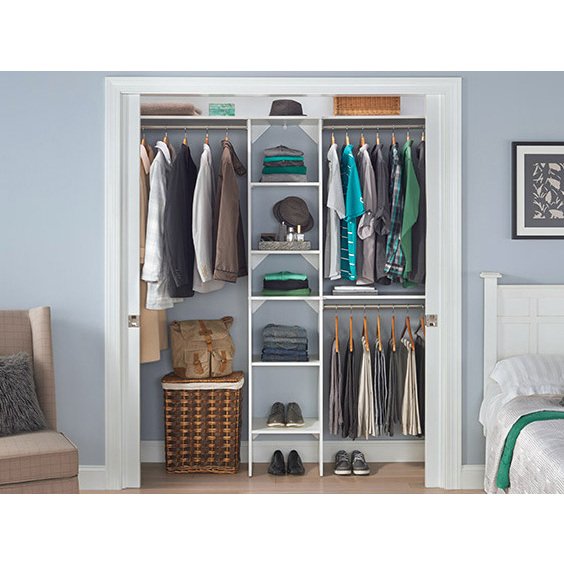
Double the function of your closet, no matter its size. Maximize every square inch with these hacks and you’ll never have closet envy again:
Buy organizers
Take a good look at your closet, do some research, and map your hack attack. Then run on over IKEA, or Target, or wherever, and purchase some durable and sturdy closet organizers.
Don’t forget the space above
Depending on the height of your ceilings, there’s typically 1-2 feet of perfectly good air space from the top shelf to the ceiling. Utilize every square inch by storing out-of-season items, or rarely used items, in this space.
Use space saving bags
Ziplock was on to something when they came out with their space bags. If you’ve got a vacuum, you’ve got an easy way to put away unused clothes. Suck the air right out and slide it under the bed. Thank u. next.
Invest in a really good jewelry organizer
Our personal favorite is the Mirror Jewelry Armoire, but there are dozens of organizers for your jewelry—it all depends on where you need the space.
For shoes, go vertical
Don’t let your shoes pile up at the bottom of your closet. Do yourself a favor and buy those vertical shoe organizers. They fit more than you’d think and you can double-up on your flats, putting two pair in one pocket. For boots, line them up on the floor underneath your clothes so they’re still out of the way but visible.
Contrary to Mommy Dearest, only use wire hangers
Plastic hangers, while durable, take up more space than wire hangers. Have a few plastic hangers on hand for heavy items, but the bulk of your hangers should be wire to maximize the most about of bar space available.
Fold and stack pants
If you’ve purchased the recommended closet organizers, then you should follow the recommended pants theory: fold, don’t hang. Pants are easier to pick out when stacked, and it’s an item that is easier to iron should the creases form.
â
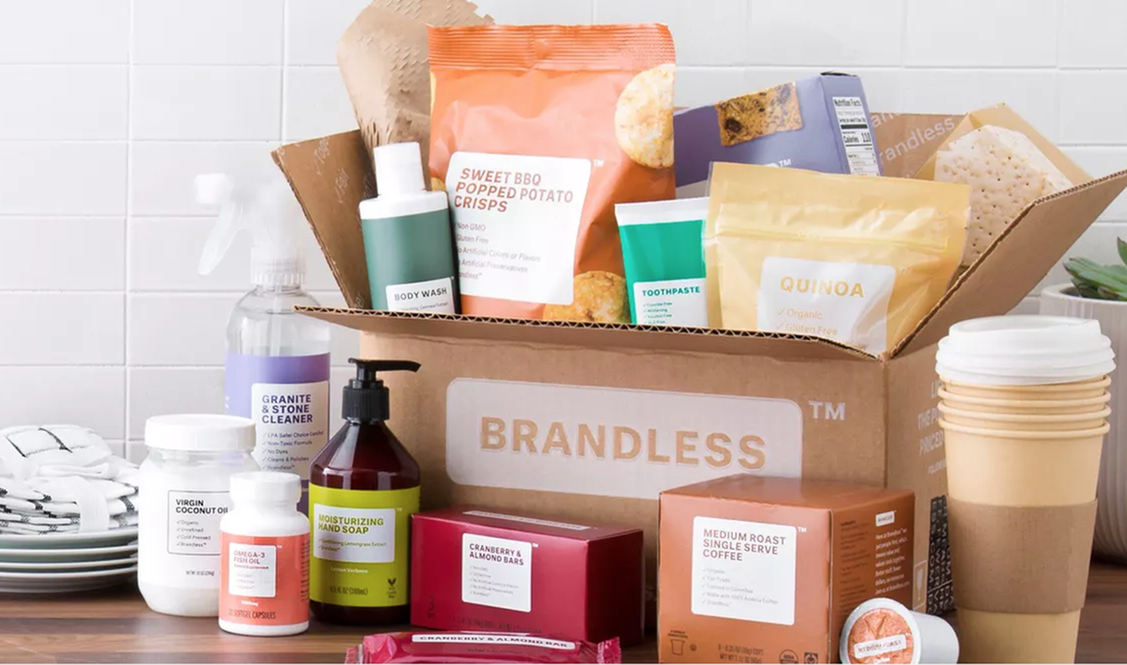
You may have heard of the new online grocery store, Brandless. Their slogan “Better everything, for everyone” has people excited to replace their food and home products with a simple, unbiased brand. Brandless was brought to life on July 11, 2017 with the intention of making better stuff accessible and affordable for more people. Their mission is deeply rooted in quality, transparency, and community-driven values. It’s the idea that big-brand names are charging too much for their product, simply because of the brand name. Here, you can purchase the same product at a much lower cost.
After seeing this new hit store several times across social media, I decided to check it out. My instant reaction was to completely replace my weekly trip to the grocery store with this easier online shopping experience. But it got me thinking: does it really save me that much money? Is there really much of a difference in their stuff? I thought I’d embark on a comparison journey to get to the bottom of my skepticism.
Step 1: make a list
Before I even visited the Brandless site I made a list of groceries I typically pick up. Not realizing Brandless is void of any fresh produce, meat, or dairy, I was immediately deterred from using them as I slowly discovered these weren’t even options. (All things considered, it makes sense why they don’t do fresh food, but, I have to say I was disappointed I could only use them for select items.)
I decided to proceed with my ‘versus’ mission anyway. My grocery list consisted of 20 fresh food and snack items, and 10 household items. Of these 30 products, I found only half of them on the Brandless website. I then had to decide which grocery competitor would be best compared to Brandless, and ended up choose Walmart since their slogan is, in fact, “Always low prices.”
At Brandless, each item costs only $3 so you’d think you’re getting some bang for your buck, right? I thought the same, until I saw their $3 bag of almonds weighed in at a mere 5.5 oz. Not much compared to Walmart’s 14 oz. for only $2 more. For this reason I made sure to list the size, weight or count on the list to get a proper comparison.
Step 2: compare
As mentioned, Brandless boasts a low $3 price tag for all their products. I wanted to find the cheapest options available on Walmart’s website to get a good comparison, so I tried to use their Great Value brand whenever possible, but if I couldn’t get GV, I went with the cheapest option for that product.
The final price for my Brandless cart—note HALF the items weren’t in there—rounded out to an even $45. Walmart’s online shopping cart came to $76.92, and I was able to get every item on my list. Even if Brandless did have all the items on my list, the cart total would come to $90. Right off the bat, Walmart wins with a $16 savings.
Step 3: shipping
There is more to consider than price alone, however. What’s the delivery charge? How long does it take to get to you? Will you be happy with the taste of your food? Let’s take a look:
Brandless Walmart
Delivery price $5 for free over $40 $8 or free over $30
Delivery time 3-5 days 2-4 days
Walmart wins again. Not only is shipping cheaper, but your stuff arrives quicker.
Step 4: quality
It’s now, though, that we have to ask ourselves the most pivotal question—does price outweigh quality? Depends on your taste. For me, Great Value paper towels still absorb liquids, no matter the maker, and candy is just as sweet no matter the manufacturer. For some people, though, quality is everything. Brandless offers certified organic, gluten free, non-GMO, vegan, and cruelty & tree-free products. Walmart also offers (some of) those things, but many people are skeptical of big-brand, corporate company’s so-called “clean” products. Brandless puts time and care into their products, as opposed to mass producing them. In addition, Brandless works with local communities and donates a lot of their products and time to fight hunger and help those in need. If that’s not worth your dollars, I don’t know what is.
Step 5: The verdict
If you’re hoping to make a full switch to Brandless for your grocery needs, I wouldn’t hold your breath. But, if you want to replace a few of your panty items with organic and healthy alternatives to Great Value then you’re in the right place. Just don’t expect to save that much money. Their marketing strategy with “everything only $3” is quite brilliant, because $3 sounds so cheap. But once you consider the amount you’re getting for $3, it balances out with your everyday shelf item, and actually costs a little more than what’s in your local grocery store. Is that totally worth receiving the best quality products? You be the judge.
You love your pets, but one of the biggest downsides of pet ownership is that pets can make your apartment smell. And that can mean you might not get your full deposit back when you move out if the odor is too strong and the pros have to be called in. Here are tips on how to clean up common pet messes and banish odors for good. We interviewed Jeremy Strickland, marketing director for Holland, Michigan-based Randy’s Carpet Care with the help of the company’s senior technician Mike Sheridan who gave us tips on how to get rid of common pet odors. But first, it’s advisable to clean up messes regularly and not wait. Keeping your apartment clean is key.
Cat and Dog Pee
If your dog or cat has peed on the carpet, it can be tough to clean.
“Urine spots are like icebergs: what you see on the surface may be but one-fifth of the problem,” says Strickland. “The other four-fifths is underneath the carpet, onto and/or into the padding and perhaps even on the sub-floor.”
To remedy this, sop up as much as you can with paper towels.
You love your pets, but one of the biggest downsides of pet ownership is that pets can make your apartment smell. And that can mean you might not get your full deposit back when you move out if the odor is too strong and the pros have to be called in. Here are tips on how to clean up common pet messes and banish odors for good. We interviewed Jeremy Strickland, marketing director for Holland, Michigan-based Randy’s Carpet Care with the help of the company’s senior technician Mike Sheridan who gave us tips on how to get rid of common pet odors. But first, it’s advisable to clean up messes regularly and not wait. Keeping your apartment clean is key.
Pinterest
Facebook
Twitter
Google+
Cat and Dog Pee
If your dog or cat has peed on the carpet, it can be tough to clean.
“Urine spots are like icebergs: what you see on the surface may be but one-fifth of the problem,” says Strickland. “The other four-fifths is underneath the carpet, onto and/or into the padding and perhaps even on the sub-floor.”
To remedy this, sop up as much as you can with paper towels.
Pinterest
Facebook
Twitter
Google+
Next, “mix a solution of equal parts hot water and vinegar. Wet a towel and scrub the spot with a circular motion. If it still smells when the spot’s dry, try it again. Once the spot feels dry, if the odor has improved, but the spot still looks ugly, mist hydrogen peroxide onto it and rake it in with your fingers. No need to soak the fibers, just make sure they are coated. NOTE: Don’t use peroxide on wool or other natural fibers,” says Strickland.
If vinegar and peroxide aren’t effective, search an enzymatic pet spot cleaner at your local pet store. Follow the directions on the bottle.
Please note that if a male cat won’t stop spraying, you might want to talk to your vet. Neutering your cat might help with this, says Strickland.
Pet Smell
Any pet owner can tell you that dogs or cats can make a home smell.
“Your dog’s lingering odors are, in large part, body odors. Body odor is caused by bacteria, so not only do you need to deodorize, you need to kill the bacteria, which is tough to do without hiring a professional carpet cleaner or renting an ozone machine,” says Strickland.
But all is not lost. To get rid of the pet smell, you can try sprinkling baking soda on the carpet and vacuum it up. You also can find products that can help eliminate this odor. If you have tile, mopping them with a 50/50 mixture of white vinegar and water may help with the smell.
Pet Hair
To take care of pet hair: vacuum, vacuum, vacuum. Strickland recommends vacuuming daily, if possible. Try to focus on well-traveled areas of the home like your entrance.
Feces
Step one: let it dry. Remove the solid parts.
“Scrape any excess off the top, then dilute a small amount of dish soap in hot water, mixed with a cap full of ammonia. Clean the spot(s) with a disposable towel dipped in this solution. Scrub in a circular motion. Careful not to get things too wet,” says Strickland.
”White vinegar and water mixed 50/50 after the ammonia and dish soap solution should neutralize the pH so it doesn’t brown as it dries,” says Strickland. “Finally, when the mess is clean and you’ve dried it as best as possible, put a spray nozzle on your hydrogen peroxide bottle and give the area a good misting (don’t saturate). Peroxide is great for organic stain removal, and it also helps prevent browning. After you’ve misted, use your fingers to rake it in.”
You now know how to best clean your apartment when you have pets.
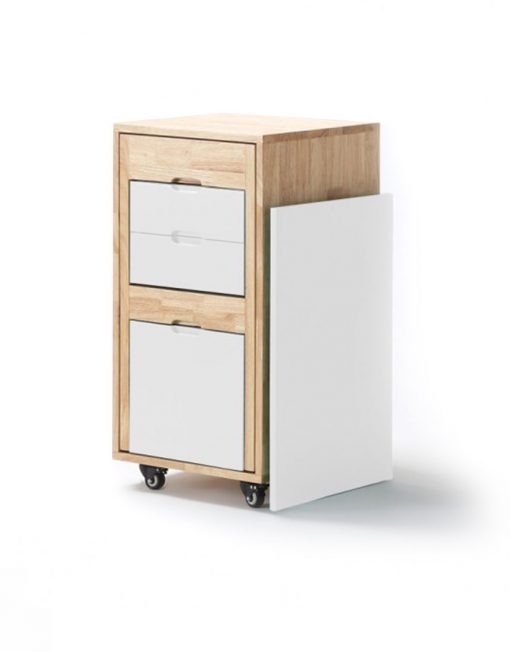
You’ve likely seen the viral videos on Instagram or Facebook showing murphy beds converting to a couch, or end tables that stretch out to a full-size dining table. Impressive, right? These modular furniture pieces—like the ones you’ll find at Expand Furniture --aren’t just for high-tech enthusiasts or engineers; you can outfit your entire apartment with this furniture for a smarter, cleaner way to live. Here’s why we believe you should ditch the bulky vintage couch and opt for transforming alternatives:
Modular furniture is great for small spaces (duh). Your bed is tucked away, leaning against a wall when you’re not using it. Your desk converts back to a small shelving unit when not in use, and your coffee table can rise to a kitchen table. What saves space more than pieces that disappear when not in use?
They can also help you declutter and live a minimalist lifestyle. When you tuck your bed away each morning, you realize you don’t need those unnecessary throw pillows. You’ll also start to ask yourself if you really need a filing cabinet of papers…because it’s 2019 after all, and you now have a compact little desk for your essential electronics. And you’ll finally decide which of your gadgets are actually worth holding on to when assign a secret drawer (hidden in your coffee table) to them.
The look of them is very sleek and clean—not too busy, which is important if you’re working with smaller spaces. And you have to admit, these things are clever. Kudos to the folks who came up with these concepts and were able to make them functional, easy to use, and smooth.
Given the aforementioned reasons above, it’s not argument that modular furniture is well worth the investment. In addition, it’s not like they have to stay in the apartment when you move. You can take these pieces with you anywhere. Even if you *gasp* buy a home, and you have room for a regular dining table, the convertible side table can still be used…as a side table. The Murphy bed sets perfectly in an office/guest room combo, and that stylish coffee table can still house your belongings.
It’s basically a no-brainer.
What are you waiting for? Impress your friends with transforming furniture. You can have Optimus Prime as a couch!
You want a pet that fits not only your personality, but your living arrangements. When it comes to apartment pets, size does matter. Giant paws and long legs don’t always mix well with tiny living spaces. However, the size of your dog isn’t the only thing that matters. When choosing the perfect pooch for your apartment, you should also take into consideration the dog’s energy level, noisiness, and even friendliness (neighbors in close quarters means lots of socializing and meeting new people and other pooches as well).
With those general traits in mind, here are the 29 best apartment dogs that could be a great fit for folks with less space and tighter quarters!
1. Basenji
The Basenji is a great option when you have close neighbors and thin walls. This barkless dog rarely gets taller than 18 inches or over 25 pounds. But beware, when left unattended for long periods of time, the Basenji can be a mischievous companion.
2. Bichon Frise
Even at their largest, the Bichon Frise (BEE-shawn FREE-say) won’t get taller than a foot. These little furballs are energetic, which means they love to play, but also need daily exercise . Bichons also shed less than similar breeds, making them ideal to leave with in close quarters or for people with allergies.
3. Boston Terrier
Another breed ideal because of their size, the Boston Terrier rarely grows taller than a foot and a half. These dogs can be particularly hyper, so they need daily, brisk walks to stay happy. But if you can keep them well-exercised, you’ll find these American Gentlemen to be wonderful, gentle, affectionate pets.
4. Brussels Griffon
The Brussels Griffon is a lively, sturdy, small breed. They are highly affectionate and bond quickly with their owners. They love to snuggle, which might be a necessity, depending on just how small your apartment is!
5. Bulldog
The Bulldog is perhaps most well-known for his laziness, making them a perfect dog for apartments. A short walk is all these guys need to keep them happy. Otherwise, they’re content to just laze around and snooze. They’re an incredibly gentle dog breed and rarely get taller than a 18 inches high.
6. Cavalier King Charles Spaniel
These dogs love to cuddle. They will lay on your lap and beg for belly rubs any chance they get. They’re very attached to their owners, so small homes are even better for them. The biggest concern comes with housetraining, as they can be hard to train. But, if you give them plenty of time outdoors and positive reinforcement, they’ll quickly become trustworthy apartment pets.
7. Chihuahua
Known for its small size, the Chihuahua makes a great apartment dog. They require minimum exercise and love being close to their owners. Chihuahuas can be untrusting of strangers, so it’s best to carefully supervise them in any social situation.
8. Chinese Crested
The Chinese Crested is a remarkably laid back breed. These dogs make the perfect companion for a lower energy—even bedridden—owner. Their ability to lay in bed for hours, coupled with their small size, makes them the perfect low-maintenance apartment dweller.
9. Coton de Tulear
Cotons are happy-go-lucky dogs that are well-fit for living in small apartments. They are small in size, have easy to care for coats, exceedingly friendly with humans and other animals, and low exercise needs. The Coton loves to play fetch and go for walks, but won’t suffer from being inside for a day either.
10. Dachshund
Dachshunds are the smallest of the hound dogs. (You probably know them for their tiny legs!) These are cute, lively dogs that often bring joy from their appearance alone. Their short legs allow them to be exercised entirely indoors, if needed.
11. French Bulldog
French Bulldogs were originally bred in England to be miniature bulldogs. Their compact size and low activity needs made them good apartment dogs. Frenchies love to play and thrive on human contact. They also make great watchdogs, because they rarely bark without reason.
12. Havanese
Nicknamed the “Velcro dog,” the Havanese will choose being inside with her owner over staying outdoors any day. However, don’t mistake their clingy personality with a lack of energy. These bouncy pups love to play, as long as their owners are near. Averaging under a foot tall, this breed makes a great apartment pet for someone with plenty of energy.
13. Greyhound
Number thirteen on our list may surprise… Greyhounds, though traditionally known for their high energy and lanky legs, make surprisingly great small home pets. Their energy needs are well-satisfied with a daily brisk walk and their friendly, calm nature makes them a great choice even for smaller apartments.
14. Japanese Chin
The Japanese Chin is a highly agile breed that makes a great indoor companion. Known for their catlike propensity for scaling tall furniture, the Chin can adapt to any living situation. Despite their elegant coats, the Chin needs little more than a weekly brushing to maintain. Their size, friendliness, and low-exercise needs make them great for apartment dwellers with less active lifestyles.
15. Lhasa Apso
The Lhasa Apso thinks his a large dog, but lucky for your apartment they rarely grow taller than a foot. Early socialization and training are needed to bring out the best in this friendly, loyal breed. Unlike the Japanese Chin above, the Lhasa dogs have coats that require daily brushing and frequent bathing.
16. Lowchen
The Lowchen are a playful, gentle breed. They are a toy breed, making their overall stature compact. Lowchen make affectionate pets who love to play and roughhouse, but do not have high exercise needs. They get along well with other animals and, with proper socialization, are friendly towards all humans, too.
17. Maltese
The Maltese has been a highly-regarded companion dog for 2,000 years. Because they have no undercoat, the Maltese are not shedders, which may be ideal if you have to live in close quarters with them. They are an affectionate breed, but frequently suffer from separation anxiety , so they are best suited for homebody type owners.
18. Manchester Terrier
The Manchester Terrier is a very intelligent, responsive breed who is easily trained to apartment living. Their miniature size makes them ideal for even the tightest living quarters. This is another breed that does best with an owner who is home often; if left alone, they can become destructive and bark incessantly.
19. Miniature Pinscher
With an appearance like a tiny Doberman, the Miniature Pinscher is as confident as he is energetic. They make great watchdogs because they are suspicious of strangers. The Mini Pin’s small size makes him good for apartments, but this breed may not do well with small children, and must be socialized early with other pets.
20. Pekinese
The companion choice of the Chinese royal courts, the Pekinese require plenty of attention and affection. They will bark at strangers, so early training is a must. The Pekinese is best as the only dog in a household, though they can be socialized to accept other pets. They make great apartment pets due to their size and affectionate nature.
21. Pomeranian
This feisty breed is a ball full of furry energy. They are not an overly dependent breed, so they make a good pet for someone who spends time out of the house. They need daily walks to work of their energy and weekly brushings. They’re also barkers, so early training is necessary to teach them when it’s appropriate.
22. Poodle
Poodles are bred in three sizes: Toy, Miniature, and Standard. Toy and Miniature are a good size for a small apartment, while the Standard size can reach up to 70 pounds. Poodles are intelligent and exceedingly easy to train. Toy and Miniature Poodles have no trouble running of their energy in the aparment, though regular walks are recommended.
23. Pug
Recognizable for their squished faces, Pugs are playful and loyal pets. They need to be close to their owners as much as possible and do not do well alone. Pugs are not generally “yappy” dogs, which means that no special training is needed to keep your neighbors happy. Due to their inactivity, quietness, and size, Pugs make a good pet for apartments of any size.
24. Schipperke
The Schipperke is a small breed with a big personality. They are easy to train and do best when they always have a task. While not overly energetic, these dogs do need to be entertained. Their coats are easy to care for with regular brushing and they are not known to be a loud breed. All of that, along with their compact size, makes them a good option for small living spaces.
25. Shiba Inu
The Shiba Inu is a dog known for his independence. Averaging around 20 pounds, it is a medium-sized breed that will do well indoors. However, the Shiba needs rigorous, daily exercise, so they are best suited to owners who already live an active lifestyle. Shiba Inus are best for skilled dog owners who are ready for this unique, fantastic breed.
26. Shih Tzu
The Shih Tzu was bred to be a friendly lapdog. They make great companions , as they are affectionate and calm. A Shih Tzu will fit in to any living environment. They are friendly to owners, strangers, other pets, and even children (as long as they are gentle). This dog was practically bred to be the perfect apartment companion.
27. Silky Terrier
Another small dog with a big personality, the Silky Terrier is a loyal dog who bonds quickly with his owners. He’ll fit nicely into any apartment with his small size, though his barking could be an issue ( basic training should take care of that, though). These dogs are full of energy, so they need daily walks to be happy in an apartment environment.
28. Toy Fox Terrier
The Toy Fox Terriers are intelligent and easy to train. They’re a toy breed, making them a good size for even the tiniest of apartments. A Toy Fox Terrier makes a great companion who would love to curl up and cuddle. Personality is important here, as some Toy Fox Terriers will require more exercise than others.
29. Yorkshire Terrier
â
Commonly known as the Yorkie, these affectionate dogs can make great apartment pets. They’re small and can be exercised easily indoors. The biggest challenge will come from their inherent “ yappiness ” and distrust of strangers, though this can be avoided with good training and socialization early on.
As always, it’s important to remember that every dog is an individual. While every breed has a general personality and disposition, there will always be variations. Do your research carefully and be sure to pick a pet that will fit your home, lifestyle, and personality. To find out more about different dog breeds check out our DogTime Breed Center .
Which breed do you think makes the perfect apartment dog? Let us know in the comments below
Vacuum before you dust
Believe it or not, your vacuum emits a little bit of dust back into the air when it’s turned on. Vacuum the entire apartment first and let that dust settle on surfaces before you swipe over them with a Swiffer Duster.
Sweep debris from your hard surfaces on to your carpeted surfaces
You can save a step by doing this. Instead of collecting all your kitchen crumbs into a pile and sweeping them into a dust pan, kick it all over to your carpeted surfaces that you plan to vacuum anyway. Do the same for entry or bathroom rugs. Shake them out onto carpeted areas so they can be sucked up quick and easy.
Work your way from the top down
Start with shelves or light fixtures and dust those first. Dust has a way of getting kicked up and redistributed when dusting your home. By starting at the top, it will settle on surfaces below which can be more quickly and easily cleaned.
Remove everything from your shower before you clean it
Yes, this will actually save you time. Lifting and cleaning around your shampoo bottles is not only less effective, it takes double to time to pick it up, spray, grab the sponge and clean the area. Remove everything so you have an empty canvas you can simply wipe and go. Put everything back and you’re done.