Moving can be exciting, but it can also be one of the most stressful things we experience in a lifetime . From packing and hiring movers to budgeting for the expenses, there’s so much to do! In all the hustle and bustle, it can be easy to forget an important step of the process. We’ve put together an essential move-out checklist to help alleviate some of the stress of moving from your current apartment to give you peace of mind and ease your mind during this truly stressful life event.
GIVE PROPER NOTICE
Photo by Scott Graham on Unsplash
To know exactly how much notice you need to give before moving out of your apartment, check your lease. The amount of noticed required can vary from apartment community to apartment community, so you’ll want to know what’s required of you. Pro tip: when you move into any new home, check the requirement right then and set a reminder or two. The delivery method required for your notice should also be specified in your lease. Usually, a written notice is required.
TRANSFER YOUR RENTERS INSURANCE
Photo by Glenn Carstens-Peters on Unsplash
Your renter’s insurance should move with you, but you’ll want to contact your carrier as soon as possible about your upcoming move. Some renter’s insurance will cover belongings during a move, so now is a good time to review your policy and ask questions, as well. Make sure you understand the insurance requirements at your new community, too. Most apartment communities not only require that you have renter’s insurance (and are able to provide proof at move-in), but they also may have specific requirements regarding things like liability coverage.
CALL YOUR UTILITY PROVIDERS
Photo by Hassan OUAJBIR on Unsplash
Two weeks before you move, call your utility providers and schedule your turn off/turn on dates. You want to turn the utilities off at your current apartment the day after you move out (to avoid the electric and water being shut off while you are trying to move boxes). This is also handy if you want to do a last-minute vacuum after all the boxes and furniture are out of the apartment. Schedule the utilities to be turned on at your new apartment the day before you move in (so you’ll have electric and water when you are moving in). Don’t forget cable and internet!
FIX EVERYTHING
Photo by Steve Johnson on Unsplash
In order to get your security deposit back, you’ll need to undo any damage you caused in the apartment. If you hung pictures, they likely left holes in the wall that will need to be filled. If you painted a wall, you’ll likely have to paint it back to its original color. If you switched out light fixtures, blinds, or drawer pulls, all of those need to be returned to the originals. Look for any pet damage, dings or scratches that weren’t there when you moved in, and stains on the carpets.
CLEAN EVERYTHING
Photo by Kelly Sikkema on Unsplash
Try to get your apartment as close to its original move-in condition as you can. Some normal wear and tear is to be expected, but make it your goal to erase the year (or years) you spent in the apartment. If you aren’t sure you can tackle the cleaning yourself, you may want to consider hiring a cleaning service to get your apartment in tip-top shape.
ASK ABOUT THE COMMUNITY’S MOVING POLICY
Photo by Russ Ward on Unsplash
Your apartment community may need advance notice if you will have moving assistance, like scheduling elevator time or possibly using the service elevator. If movers will have to park along the street, the apartment manager may have to notify the city, so it’s especially important that you give them plenty of notice.
SCHEDULE A MOVE-OUT INSPECTION
Photo by La Miko from Pexels
Once your apartment is clean and empty, schedule a walk-through with your property manager. Your property manager may arrive with checklists: the one you filled out together during your move-in walk-through and a new one you’ll fill out during your move-out walk-through. Try to be there for the move-out inspection, if possible. This way you can discuss any issues on the spot and agree to any necessary repairs, eliminating any unwelcome surprises when it comes time to get your security deposit back.
CHANGE YOUR ADDRESS
Photo by Brett Sayles from Pexels
You can do this at your local post office or online . Be sure to give your new address to anyone who might send you mail, from your bank to your employer to your grandma. Make sure your current property manager has your forwarding address as well, so they know where to send your security deposit refund if you’re entitled to one.
GATHER YOUR KEYS
Photo by Ingo Joseph from Pexels
Collect all copies of your keys. Did you give a key to your friend so they could pet-sit while you were on vacation? Be sure to get it back. If you have separate keys or cards for the security gate, swimming pool, mail room, or fitness center, locate those as well. Make sure you turn in all of your keys to your leasing office before close of business on the day your lease expires to avoid any additional rent charges.
Yes, moving can be stressful, but with a little preparation and to-do list writing, it can be manageable. And soon, you'll be settled into your new home and it will all have been worth it! For even more tips on making your move as smooth as possible, check out our previous blog post on Moving Tips !
If you think you're doing a bang-up job cleaning your apartment, well, think again.
What about the outside of the toilet bowl? When was the last time you gave that a good chlorine wipe down? Have you wondered if the pile of dirty dishes is a haven for bacteria?
Let’s get cracking to clean where you haven’t given it much thought until now.
Here are 10 ideas to start. It’s spic and span time, people.
1. Bathroom sink
Guys, this one’s for you. If your girlfriend or other visitors are coming over, you want to make a good impression. Be sure to get rid of shaving debris in the bathroom sink and dried toothpaste streaks.
What’s handy for a quick clean up ? Disposable wipes will do the trick, and don’t forget to do a once over on the countertop and faucets.
2. Appliances
How often do you think to clean around or under appliances? Think spilled coffee by the coffee maker, or the trail of crumbs under your toaster. The big appliances are dirt traps, too, like under the refrigerator and stove.
Set up a reminder that dings once every couple of months to wipe, sweep or mop. You’ll be glad you did.
3. Doorknobs
How many times have you touched a doorknob with sticky fingers? Or discovered a layer of dust on the hardware surrounding the knob? There could also be lint way on top of a doorway, where you need a retractable dust-grabber to reach it.
Doors that are used a lot, like the pantry, laundry room and bathroom doors, get grimier than you realize. Try your best to clean right away so you don’t forget .
4. Shower curtain
Have an icky shower curtain? Throw it in the wash with musty towels. A good wash will get rid of moldy black streaks that have accumulated over time at the base of the shower curtain.
Be sure to use a cup of detergent with white vinegar, or add half a cup of baking soda to equal parts of laundry detergent.
5. The rest of the toilet
There’s a ring inside the toilet bowl that can be pretty impossible to get rid of. But with a heavy-duty toilet bowl cleaner or one of the pods you leave in the tank — you can reduce the impact of the stain.
But the area at the base of the toilet bowl and the floor surrounding it is another story. It can get nasty down there, so be sure to wipe it off on a regular basis. Keep disposable wipes handy or a cleaning spray nearby as an inspiring reminder of the task at hand.
6. Backsplash
Cook much? The backsplash is a magnet for gunk. Check for layers of dust and grease build-up that you might not notice.
If you’re already wiping down the countertop , then you should add the backsplash to your must-clean list. Be sure to use a disinfectant that is non-toxic and safe around food prep areas.
7. Bedroom
Look, a smelly bedroom is unpleasant for everyone. But you might not even notice the odor because you’ve gotten so used to it. If the funk is from dirty sheets, wash them. Or clean up that pile of laundry that’s been sitting on the floor for way too long.
Reclaim your personal space by making everything smell nice again.
Step one to recovery: Air everything out! Open the windows!
Step two: Wash bed linens, that dirty laundry pile, your grungy gym clothes, plus the T-shirt you sleep in.
8. Windowsills
Next time you open or close your window blinds, give the windowsills and window tracks a hard look. You’ll be surprised with what you find there: Pet dander, dust, dead bugs and more grossness.
This is a quick fix and there’s no excuse to ignore something right before your eyes. Use a damp cloth or microfiber cloth and a cleaning solution and you’re done. To clean the cracks in the window tracks, use a putty knife wrapped in a cloth.
9. Under the couch
It’s hard to know what’s lurking under the couch until you take a look and realize you have a city of dust bunnies! You know, those small clumps of dust that are a tangle of pet dander, your hair and lint, among other icky things.
Be sure to clean under furniture and in the corners. If you’ve got carpet, then vacuum it all away, or use a sweeper-style duster or broom on laminate floors.
10. Garbage cans
What’s up with not lining a garbage bin with a bag? Loose trash is a big no-no, so don’t keep all the soiled remnants of your life out in the open.
Instead, stay private and clean by using a liner for the bin in the bathroom or elsewhere. You can even shop for bags infused with a scent to ease any chance of funk.
A little at a time goes a long way
Proud of yourself for cleaning those ignored places ? Now just think of everything else that deserves a good refresh in your apartment. Start making a list and take it one step at a time.
You don’t have to deep clean every day. Make a habit to take a look around every so often and clean things as needed.
Not too many people put thought into their dishwasher, let alone how to “properly” load one. But if you want truly clean dishes and don’t want to work on them even after the cycle is finished, there are certain rules that one must abide. Here are seven mistakes that almost everybody – novices and experts alike – makes when loading and unloading the dishwasher.
Loading it One Piece at A Time
Nobody wants dirty dishes to pile in the sink, but it is the best strategy for an efficient load. You'll be able to use the space in the dishwasher the best if you load it all at once, starting with your largest dishes and filling in the space with the smaller pieces.
Not Sorting the Flatware First
This one isn't a major faux pas, but rather a simple tip that makes dishwasher life a little easier. As you load your flatware into the silverware caddy, keep forks with forks and spoons with spoons. It makes easy work of unloading clean pieces into the drawer.
Letting Your Spoons Spoon
Perfectly nested spoons might save space, but it means that water and detergent can't clean between them. Instead, alternative your spoons (and maybe the forks, too) between heads up and heads down.
Putting Good Knives in the Dishwasher
If you have nice knives (that you'd like to keep nice), keep them out of the dishwasher. The Kitchn tells us that "the abrasive detergent, high heat, and jostling with other dishwasher items will cause the blade to dull prematurely and give your knife nicks in the edge."
Loading Cookie Sheets in the Wrong Spot
Your big, flat trays and pans should be on the sides of the bottom rack, never the front. You don't want them to block access to the detergent dispenser.
Ignoring the Sprayer Arm
That arm in the center of the dishwasher is the source of all the magic that makes dirty dishes clean. Your job is just to make sure that every dish has a clear path to the sprayer arm. That means loading plates so that they face the center of the dishwasher (and the arm), but also taking care not to overload the dishwasher. You might need to run it more often, but it will pay off in the long run when you don't have to rinse afterwards, or ever run the cycle again.
Unloading the Top First
Like socks that go missing in the dryer, upturned cups are a given in the homekeeping world. Those cups collect gross dish water, just waiting to be spilled all over the clean dishes below. To avoid having to set the dishwasher for a repeat performance, unload the bottom rack first, then handle the cups up top.
Got a stinky gym bag? Living room need some refreshing? Already have some essential oils lying around? Perfect! Below are 3 recipes for all natural, green, odor busters that are sure to freshen up any fabric or air space. Even if you don’t already have these ingredients in your cabinet, we highly recommend purchasing them, as they can be used for multiple purposes. Essential oils have also been found to benefit the mind and body making these ingredients truly versitle.
But first: get that apartment CLEAN!
LEMON + CLOVE AIR FRESHENER SPRAY
Perfect for any time a room needs a little freshening up. The lemon and clove is great warm scent for fall, but you can use your favorite essential oils too – get creative!
1/2 cup water
1/4 cup vodka (or rubbing alcohol) – vodka is odorless and evaporates quicker
5 drops lemon essential oil
5 drops clove essential oil
spray bottle
Add ingredients to a spray bottle and shake to combine. Spray 2-3 sprays in any room that needs a little freshening.
LEMON + PEPPERMINT GARBAGE CAN FRESHENING TABLETS
This concoction works great in the bottom of garbage cans and diaper pails. Place one or two anywhere a little odor absorption is necessary. Toss when odors aren’t being absorbed any longer.
1/2cup baking soda
1/3 cup Epsom salt
About 1/4 cup water
10 drops of your favorite essential oils
Ice cube trays
Combine the ingredients and make a dry paste and spoon a tablespoon at a time in each compartment. Don’t fill to the top because the mixture will expand a bit. Allow to dry out completely overnight and/or in the sun. Once the tablets have hardened, carefully turn the tray over onto a clean surface. Place 1-2 in a garbage can – it should last at least 2 weeks. Store tablets in an airtight container for 3 months
CITRUS + TEA TREE FABRIC SANITIZER SPRAY
If you need to sanitize/freshen a pillow or a pair of shoes, this spray will become a new favorite.
1/2 cup water
1/4 cup rubbing alcohol
2 drops citrus essential oil
4 drops tea trea (melaleuca) oil
Add ingredients to a spray bottle and shake to combine. Spray on shoes and fabric to freshen – let dry completely before using. If you are concerned about water on fabric, test in an inconspicuous area first.
You love your pets, but one of the biggest downsides of pet ownership is that pets can make your apartment smell. And that can mean you might not get your full deposit back when you move out if the odor is too strong and the pros have to be called in. Here are tips on how to clean up common pet messes and banish odors for good. We interviewed Jeremy Strickland, marketing director for Holland, Michigan-based Randy’s Carpet Care with the help of the company’s senior technician Mike Sheridan who gave us tips on how to get rid of common pet odors. But first, it’s advisable to clean up messes regularly and not wait. Keeping your apartment clean is key.
Cat and Dog Pee
If your dog or cat has peed on the carpet, it can be tough to clean.
“Urine spots are like icebergs: what you see on the surface may be but one-fifth of the problem,” says Strickland. “The other four-fifths is underneath the carpet, onto and/or into the padding and perhaps even on the sub-floor.”
To remedy this, sop up as much as you can with paper towels.
You love your pets, but one of the biggest downsides of pet ownership is that pets can make your apartment smell. And that can mean you might not get your full deposit back when you move out if the odor is too strong and the pros have to be called in. Here are tips on how to clean up common pet messes and banish odors for good. We interviewed Jeremy Strickland, marketing director for Holland, Michigan-based Randy’s Carpet Care with the help of the company’s senior technician Mike Sheridan who gave us tips on how to get rid of common pet odors. But first, it’s advisable to clean up messes regularly and not wait. Keeping your apartment clean is key.
Pinterest
Facebook
Twitter
Google+
Cat and Dog Pee
If your dog or cat has peed on the carpet, it can be tough to clean.
“Urine spots are like icebergs: what you see on the surface may be but one-fifth of the problem,” says Strickland. “The other four-fifths is underneath the carpet, onto and/or into the padding and perhaps even on the sub-floor.”
To remedy this, sop up as much as you can with paper towels.
Pinterest
Facebook
Twitter
Google+
Next, “mix a solution of equal parts hot water and vinegar. Wet a towel and scrub the spot with a circular motion. If it still smells when the spot’s dry, try it again. Once the spot feels dry, if the odor has improved, but the spot still looks ugly, mist hydrogen peroxide onto it and rake it in with your fingers. No need to soak the fibers, just make sure they are coated. NOTE: Don’t use peroxide on wool or other natural fibers,” says Strickland.
If vinegar and peroxide aren’t effective, search an enzymatic pet spot cleaner at your local pet store. Follow the directions on the bottle.
Please note that if a male cat won’t stop spraying, you might want to talk to your vet. Neutering your cat might help with this, says Strickland.
Pet Smell
Any pet owner can tell you that dogs or cats can make a home smell.
“Your dog’s lingering odors are, in large part, body odors. Body odor is caused by bacteria, so not only do you need to deodorize, you need to kill the bacteria, which is tough to do without hiring a professional carpet cleaner or renting an ozone machine,” says Strickland.
But all is not lost. To get rid of the pet smell, you can try sprinkling baking soda on the carpet and vacuum it up. You also can find products that can help eliminate this odor. If you have tile, mopping them with a 50/50 mixture of white vinegar and water may help with the smell.
Pet Hair
To take care of pet hair: vacuum, vacuum, vacuum. Strickland recommends vacuuming daily, if possible. Try to focus on well-traveled areas of the home like your entrance.
Feces
Step one: let it dry. Remove the solid parts.
“Scrape any excess off the top, then dilute a small amount of dish soap in hot water, mixed with a cap full of ammonia. Clean the spot(s) with a disposable towel dipped in this solution. Scrub in a circular motion. Careful not to get things too wet,” says Strickland.
”White vinegar and water mixed 50/50 after the ammonia and dish soap solution should neutralize the pH so it doesn’t brown as it dries,” says Strickland. “Finally, when the mess is clean and you’ve dried it as best as possible, put a spray nozzle on your hydrogen peroxide bottle and give the area a good misting (don’t saturate). Peroxide is great for organic stain removal, and it also helps prevent browning. After you’ve misted, use your fingers to rake it in.”
You now know how to best clean your apartment when you have pets.
You want a pet that fits not only your personality, but your living arrangements. When it comes to apartment pets, size does matter. Giant paws and long legs don’t always mix well with tiny living spaces. However, the size of your dog isn’t the only thing that matters. When choosing the perfect pooch for your apartment, you should also take into consideration the dog’s energy level, noisiness, and even friendliness (neighbors in close quarters means lots of socializing and meeting new people and other pooches as well).
With those general traits in mind, here are the 29 best apartment dogs that could be a great fit for folks with less space and tighter quarters!
1. Basenji
The Basenji is a great option when you have close neighbors and thin walls. This barkless dog rarely gets taller than 18 inches or over 25 pounds. But beware, when left unattended for long periods of time, the Basenji can be a mischievous companion.
2. Bichon Frise
Even at their largest, the Bichon Frise (BEE-shawn FREE-say) won’t get taller than a foot. These little furballs are energetic, which means they love to play, but also need daily exercise . Bichons also shed less than similar breeds, making them ideal to leave with in close quarters or for people with allergies.
3. Boston Terrier
Another breed ideal because of their size, the Boston Terrier rarely grows taller than a foot and a half. These dogs can be particularly hyper, so they need daily, brisk walks to stay happy. But if you can keep them well-exercised, you’ll find these American Gentlemen to be wonderful, gentle, affectionate pets.
4. Brussels Griffon
The Brussels Griffon is a lively, sturdy, small breed. They are highly affectionate and bond quickly with their owners. They love to snuggle, which might be a necessity, depending on just how small your apartment is!
5. Bulldog
The Bulldog is perhaps most well-known for his laziness, making them a perfect dog for apartments. A short walk is all these guys need to keep them happy. Otherwise, they’re content to just laze around and snooze. They’re an incredibly gentle dog breed and rarely get taller than a 18 inches high.
6. Cavalier King Charles Spaniel
These dogs love to cuddle. They will lay on your lap and beg for belly rubs any chance they get. They’re very attached to their owners, so small homes are even better for them. The biggest concern comes with housetraining, as they can be hard to train. But, if you give them plenty of time outdoors and positive reinforcement, they’ll quickly become trustworthy apartment pets.
7. Chihuahua
Known for its small size, the Chihuahua makes a great apartment dog. They require minimum exercise and love being close to their owners. Chihuahuas can be untrusting of strangers, so it’s best to carefully supervise them in any social situation.
8. Chinese Crested
The Chinese Crested is a remarkably laid back breed. These dogs make the perfect companion for a lower energy—even bedridden—owner. Their ability to lay in bed for hours, coupled with their small size, makes them the perfect low-maintenance apartment dweller.
9. Coton de Tulear
Cotons are happy-go-lucky dogs that are well-fit for living in small apartments. They are small in size, have easy to care for coats, exceedingly friendly with humans and other animals, and low exercise needs. The Coton loves to play fetch and go for walks, but won’t suffer from being inside for a day either.
10. Dachshund
Dachshunds are the smallest of the hound dogs. (You probably know them for their tiny legs!) These are cute, lively dogs that often bring joy from their appearance alone. Their short legs allow them to be exercised entirely indoors, if needed.
11. French Bulldog
French Bulldogs were originally bred in England to be miniature bulldogs. Their compact size and low activity needs made them good apartment dogs. Frenchies love to play and thrive on human contact. They also make great watchdogs, because they rarely bark without reason.
12. Havanese
Nicknamed the “Velcro dog,” the Havanese will choose being inside with her owner over staying outdoors any day. However, don’t mistake their clingy personality with a lack of energy. These bouncy pups love to play, as long as their owners are near. Averaging under a foot tall, this breed makes a great apartment pet for someone with plenty of energy.
13. Greyhound
Number thirteen on our list may surprise… Greyhounds, though traditionally known for their high energy and lanky legs, make surprisingly great small home pets. Their energy needs are well-satisfied with a daily brisk walk and their friendly, calm nature makes them a great choice even for smaller apartments.
14. Japanese Chin
The Japanese Chin is a highly agile breed that makes a great indoor companion. Known for their catlike propensity for scaling tall furniture, the Chin can adapt to any living situation. Despite their elegant coats, the Chin needs little more than a weekly brushing to maintain. Their size, friendliness, and low-exercise needs make them great for apartment dwellers with less active lifestyles.
15. Lhasa Apso
The Lhasa Apso thinks his a large dog, but lucky for your apartment they rarely grow taller than a foot. Early socialization and training are needed to bring out the best in this friendly, loyal breed. Unlike the Japanese Chin above, the Lhasa dogs have coats that require daily brushing and frequent bathing.
16. Lowchen
The Lowchen are a playful, gentle breed. They are a toy breed, making their overall stature compact. Lowchen make affectionate pets who love to play and roughhouse, but do not have high exercise needs. They get along well with other animals and, with proper socialization, are friendly towards all humans, too.
17. Maltese
The Maltese has been a highly-regarded companion dog for 2,000 years. Because they have no undercoat, the Maltese are not shedders, which may be ideal if you have to live in close quarters with them. They are an affectionate breed, but frequently suffer from separation anxiety , so they are best suited for homebody type owners.
18. Manchester Terrier
The Manchester Terrier is a very intelligent, responsive breed who is easily trained to apartment living. Their miniature size makes them ideal for even the tightest living quarters. This is another breed that does best with an owner who is home often; if left alone, they can become destructive and bark incessantly.
19. Miniature Pinscher
With an appearance like a tiny Doberman, the Miniature Pinscher is as confident as he is energetic. They make great watchdogs because they are suspicious of strangers. The Mini Pin’s small size makes him good for apartments, but this breed may not do well with small children, and must be socialized early with other pets.
20. Pekinese
The companion choice of the Chinese royal courts, the Pekinese require plenty of attention and affection. They will bark at strangers, so early training is a must. The Pekinese is best as the only dog in a household, though they can be socialized to accept other pets. They make great apartment pets due to their size and affectionate nature.
21. Pomeranian
This feisty breed is a ball full of furry energy. They are not an overly dependent breed, so they make a good pet for someone who spends time out of the house. They need daily walks to work of their energy and weekly brushings. They’re also barkers, so early training is necessary to teach them when it’s appropriate.
22. Poodle
Poodles are bred in three sizes: Toy, Miniature, and Standard. Toy and Miniature are a good size for a small apartment, while the Standard size can reach up to 70 pounds. Poodles are intelligent and exceedingly easy to train. Toy and Miniature Poodles have no trouble running of their energy in the aparment, though regular walks are recommended.
23. Pug
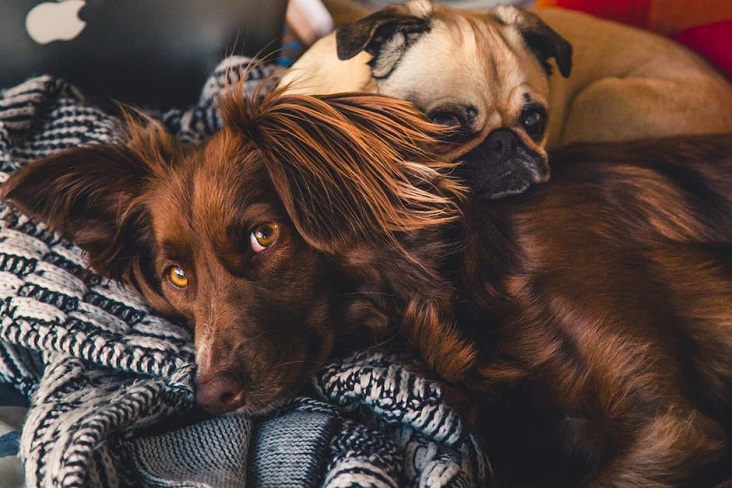
Recognizable for their squished faces, Pugs are playful and loyal pets. They need to be close to their owners as much as possible and do not do well alone. Pugs are not generally “yappy” dogs, which means that no special training is needed to keep your neighbors happy. Due to their inactivity, quietness, and size, Pugs make a good pet for apartments of any size.
24. Schipperke
The Schipperke is a small breed with a big personality. They are easy to train and do best when they always have a task. While not overly energetic, these dogs do need to be entertained. Their coats are easy to care for with regular brushing and they are not known to be a loud breed. All of that, along with their compact size, makes them a good option for small living spaces.
25. Shiba Inu
The Shiba Inu is a dog known for his independence. Averaging around 20 pounds, it is a medium-sized breed that will do well indoors. However, the Shiba needs rigorous, daily exercise, so they are best suited to owners who already live an active lifestyle. Shiba Inus are best for skilled dog owners who are ready for this unique, fantastic breed.
26. Shih Tzu
The Shih Tzu was bred to be a friendly lapdog. They make great companions , as they are affectionate and calm. A Shih Tzu will fit in to any living environment. They are friendly to owners, strangers, other pets, and even children (as long as they are gentle). This dog was practically bred to be the perfect apartment companion.
27. Silky Terrier
Another small dog with a big personality, the Silky Terrier is a loyal dog who bonds quickly with his owners. He’ll fit nicely into any apartment with his small size, though his barking could be an issue ( basic training should take care of that, though). These dogs are full of energy, so they need daily walks to be happy in an apartment environment.
28. Toy Fox Terrier
The Toy Fox Terriers are intelligent and easy to train. They’re a toy breed, making them a good size for even the tiniest of apartments. A Toy Fox Terrier makes a great companion who would love to curl up and cuddle. Personality is important here, as some Toy Fox Terriers will require more exercise than others.
29. Yorkshire Terrier
â
Commonly known as the Yorkie, these affectionate dogs can make great apartment pets. They’re small and can be exercised easily indoors. The biggest challenge will come from their inherent “ yappiness ” and distrust of strangers, though this can be avoided with good training and socialization early on.
As always, it’s important to remember that every dog is an individual. While every breed has a general personality and disposition, there will always be variations. Do your research carefully and be sure to pick a pet that will fit your home, lifestyle, and personality. To find out more about different dog breeds check out our DogTime Breed Center .
Which breed do you think makes the perfect apartment dog? Let us know in the comments below